
Where to Sell Digital Products in 2026: AurumVault vs Etsy vs Gumroad vs Payhip
Choosing where to sell digital products can affect your brand, customer experience, discovery and growth. This guide compares AurumVault, Etsy, Gumroad and Payhip and explains what creators should consider when choosing a platform.
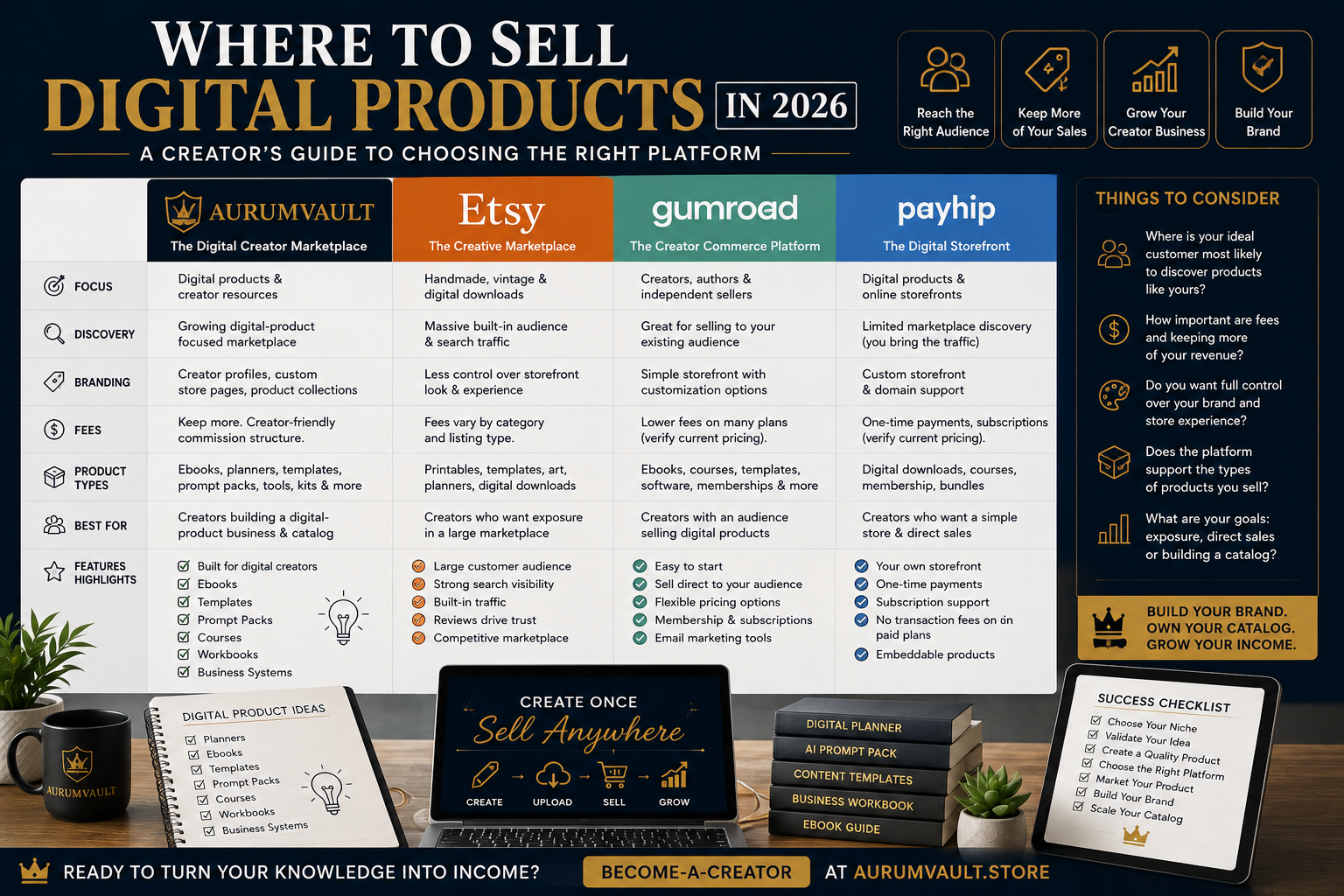
Where to Sell Digital Products in 2026: AurumVault vs Etsy vs Gumroad vs Payhip
You created the product. Now comes another important decision: where should you sell it?
Creators in 2026 have more options than ever for selling ebooks, digital planners, journals, templates, prompt packs, workbooks, business resources and interactive downloads.
But selling platforms are not interchangeable. The right choice depends on what you sell, the audience you want to reach and the type of creator business you want to build.
What Should You Look for in a Digital Product Platform?
Before choosing a marketplace, consider several factors: product compatibility, marketplace discovery, storefront experience, branding, creator tools, fees, customer experience and your ability to grow a catalog over time.
Do not choose a platform only because it is popular. Choose one that fits the products and business you are actually building.
AurumVault
AurumVault is positioned as a digital marketplace for creators selling practical downloadable resources.
Product categories can include digital planners, journals, ebooks, prompt packs, templates, business systems, interactive resources and creator tools.
This makes AurumVault especially relevant for creators who want their products presented in an environment centered around digital products rather than mixed among large numbers of unrelated physical goods.
AurumVault can be a strong fit for creators building a catalog of premium digital resources and looking for another marketplace through which customers can discover their work.
Etsy
Etsy is widely known for handmade, creative and customizable products and also supports digital downloads.
Creators commonly use Etsy for products such as printables, invitations, planners, templates, wall art and other downloadable resources.
One of Etsy's biggest attractions is its established marketplace audience. The tradeoff is competition. Creators may be competing with many similar listings and must pay close attention to product presentation, keywords, thumbnails and differentiation.
Etsy can make sense for creators whose products align naturally with what shoppers already search for on the marketplace.
Gumroad
Gumroad has long been associated with independent creators selling products directly to audiences online.
It can work for ebooks, guides, courses, memberships, downloads and other creator products.
Gumroad can be particularly useful when a creator already has an audience through social media, email, a website or another community and primarily needs a straightforward way to sell to that audience.
Creators should evaluate current pricing, features and terms directly before choosing any platform.
Payhip
Payhip provides tools for creators who want to establish an online storefront for digital products and other supported offerings.
It can appeal to creators who want more of a direct-store approach rather than relying entirely on a large marketplace.
As with any platform, creators should compare current pricing, supported products, payment options, customization and other features against their particular needs.
AurumVault vs Etsy
The biggest strategic difference is marketplace positioning.
Etsy operates across a broad creative-commerce ecosystem containing both physical and digital products.
AurumVault is focused on digital products and resources.
A creator selling digital planners, business systems, prompt packs, journals or ebooks may therefore consider whether a specialized digital marketplace fits the way they want their catalog positioned.
The two platforms do not necessarily have to be mutually exclusive. Where platform rules allow, creators can consider a multi-channel strategy rather than relying on only one source of customers.
AurumVault vs Gumroad
Gumroad is strongly associated with creators selling directly to their existing audiences.
AurumVault's marketplace model creates a different opportunity: positioning products within a destination centered on discovering digital resources from creators.
The better fit depends partly on whether your strategy emphasizes direct audience conversion, marketplace discovery or a combination of both.
AurumVault vs Payhip
Payhip can provide creators with tools for operating their own digital storefront.
AurumVault approaches the opportunity as a digital marketplace where multiple creators and products can exist within the same broader shopping environment.
That distinction matters when deciding whether you primarily want your own standalone-style storefront experience or participation in a broader creator marketplace.
Do You Have to Choose Only One Platform?
Not necessarily.
A creator may decide to build a multi-channel distribution strategy when the applicable platform terms permit it.
For example, one product catalog might use a creator marketplace for discovery while also using direct marketing, social media, email or another storefront to reach additional customers.
The important consideration is maintaining accurate pricing, product files, licensing information and customer support across every channel you use.
What Digital Products Can You Sell?
Potential digital products include planners, journals, ebooks, prompt packs, templates, workbooks, checklists, educational guides, business resources, content kits, media kits and interactive digital tools.
The strongest products generally solve a recognizable problem or help a specific audience accomplish something more efficiently.
Marketplace Discovery vs Bringing Your Own Audience
This distinction is important for new creators.
Some selling strategies depend heavily on the creator bringing traffic from TikTok, Instagram, Facebook, YouTube, email or search engines.
Marketplace-based strategies can provide an additional discovery channel, although simply listing a product never guarantees traffic or sales.
Creators should still invest in strong product titles, descriptions, cover images, positioning and marketing.
Build a Catalog, Not Just One Product
A creator business becomes more powerful when multiple products serve the same customer.
A real-estate creator might begin with a caption template and later add a content planner, lead-generation workbook, open-house marketing kit and client guide.
A financial creator might build a budgeting planner, debt tracker, savings workbook and financial-goal system.
One product can introduce the customer to your work. A catalog gives that customer reasons to return.
How to Choose the Best Platform
Ask yourself five questions.
First, what exactly am I selling?
Second, where is my ideal customer most likely to discover products like mine?
Third, do I already have an audience?
Fourth, how important is marketplace discovery to my strategy?
Fifth, do I want to build a long-term catalog and creator brand?
Your answers can help determine which platform or combination of platforms makes the most sense.
Where Should New Digital Creators Start?
Start with one strong product rather than waiting until you have an enormous catalog.
Choose a specific audience. Identify a real problem. Create a polished solution. Build professional product imagery and a clear description explaining exactly what the customer receives.
Then publish, learn from customer response and develop the next product around another problem your audience faces.
Become an AurumVault Creator
For creators looking for another place to build and sell a digital-product catalog, AurumVault is designed around digital resources including planners, journals, ebooks, prompt packs, templates, business systems and interactive products.
The goal is not simply to upload a file. It is to build a collection of useful products customers can discover, purchase and return to as your catalog grows.
If you already create digital products or have expertise that could be transformed into one, becoming an AurumVault creator provides another potential distribution channel for your work.
Final Verdict: Where Is the Best Place to Sell Digital Products in 2026?
There is no universal platform that is best for every creator.
Etsy may appeal to creators seeking access to a large established creative marketplace. Gumroad can work well for creators selling directly to an audience. Payhip can appeal to creators wanting digital storefront tools. AurumVault offers a digital-focused marketplace approach for creators building catalogs of downloadable resources.
The strongest strategy may ultimately be broader than choosing one platform.
Create something genuinely useful. Present it professionally. Build a recognizable creator brand. Diversify your discovery channels where appropriate. And make it easy for customers to understand exactly how your product helps them.
Because the real opportunity is not simply finding somewhere to upload a digital file. It is building a digital-product business customers have a reason to return to.
Enjoying the Academy?
Join AurumVault Insider for new practical guides, digital tools, and marketplace releases.
No spam. Unsubscribe anytime. Privacy
By subscribing, you agree to receive AurumVault Insider emails. You can unsubscribe at any time.
Continue your journey
Keep reading
Cyber Insurance Renewal Checklist: 90-Day Evidence Guide for 2026
Cyber insurance renewal should not begin with trying to make last year's answers fit today's environment. A stronger process starts by auditing prior representations, validating current controls, collecting evidence, documenting gaps and linking every material answer to what can actually be supported.
How to Plan a Wedding Without Losing Your Mind (or Your Budget)
Engaged couples don't burn out because there's too much to plan — they burn out because they tackle it in the wrong order. Here's the sequence that actually keeps a wedding on budget and on schedule.
The Complete Guide to Selling Digital Products Online
Selling digital products successfully comes down to a handful of decisions made in the right order: a specific offer, intentional pricing, the right platform, and a system that turns one-time buyers into repeat customers.