
How to Start a Podcast: Beginner's Guide | AurumVault
Starting a podcast does not require a professional studio or complicated system. Learn how to choose your topic, define your audience, record your first episodes, launch your show, and create a repeatable promotion strategy.
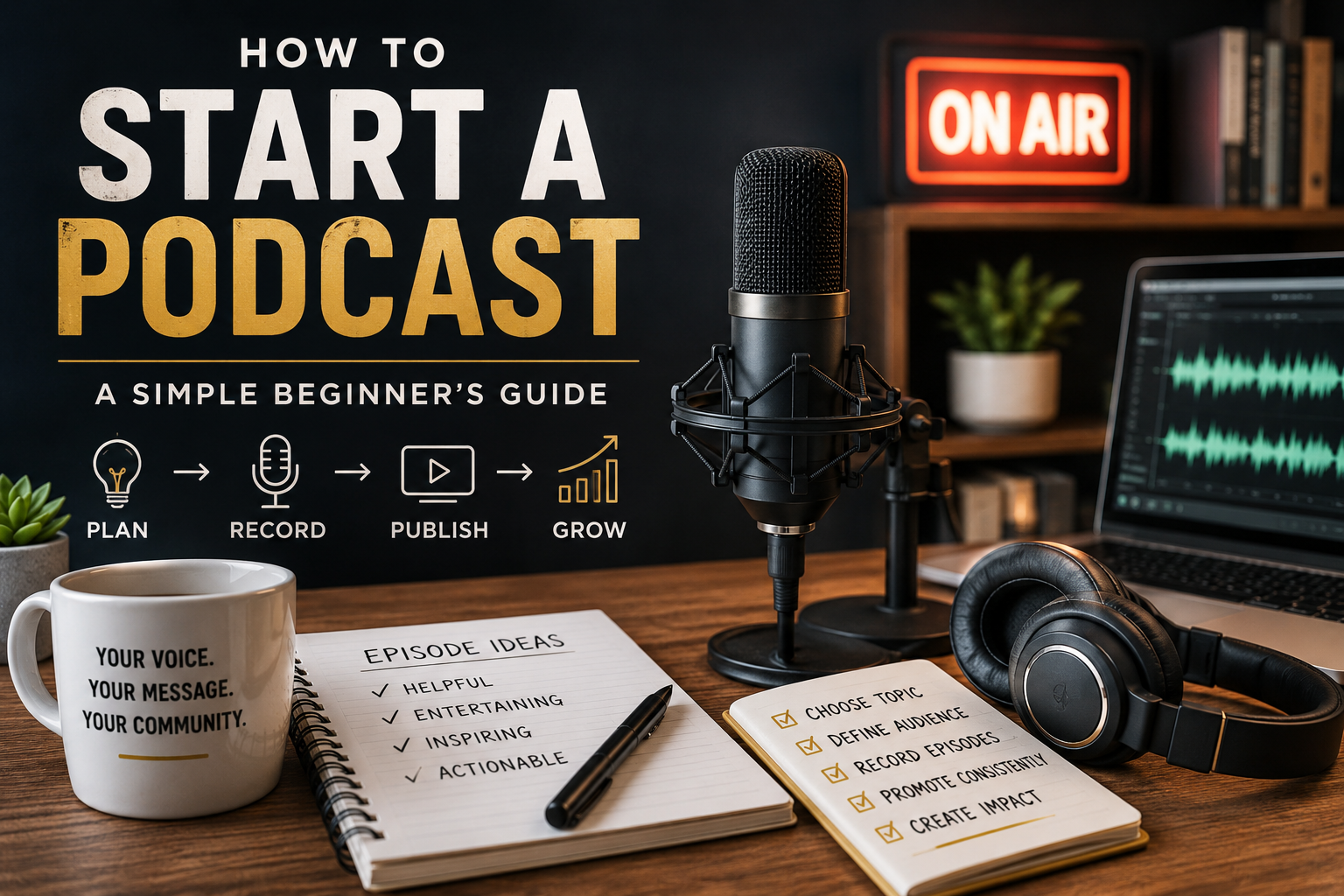
How to Start a Podcast: A Simple Beginner’s Guide
Starting a podcast can seem complicated from the outside.
You may be thinking about microphones, hosting platforms, editing software, cover art, guests, social media clips, and how you are supposed to find listeners in the first place.
But a successful podcast begins much more simply:
You need a clear reason to speak, a defined audience to speak to, and a repeatable system that helps you keep showing up.
You do not need the most expensive equipment or a professional studio to begin.
You need clarity, consistency, and a plan.
This guide walks through the essential steps for starting a podcast and building a foundation you can realistically maintain.
1. Decide Why You Want to Start a Podcast
Before choosing a microphone or designing your cover, answer one question:
Why should this podcast exist?
Your podcast might be designed to:
- educate
- entertain
- share personal experiences
- build a community
- grow a business
- strengthen your personal brand
- interview interesting people
- teach a specialized subject
- discuss faith, culture, finance, business, technology, or another niche
- create deeper conversations than short-form social media allows
Your purpose does not need to sound impressive.
It needs to be clear enough to guide your decisions.
If you understand why the show exists, choosing topics, guests, titles, and promotional content becomes much easier.
2. Identify Your Ideal Listener
Trying to create a podcast for everyone usually makes it harder to create something memorable for anyone.
Instead, picture the person you most want to reach.
Ask:
- What are they interested in?
- What problems are they trying to solve?
- What questions do they regularly ask?
- What kind of conversations do they already listen to?
- What would make them return for another episode?
Your audience might be new entrepreneurs, parents, ministry leaders, creators, young professionals, business owners, investors, or people navigating a very specific challenge.
You can always attract a broader audience later.
At the beginning, clarity is an advantage.
3. Choose a Clear Podcast Topic
Your podcast needs enough focus that someone can quickly understand what it is about.
Compare:
“We talk about everything happening in life.”
with:
“A weekly conversation helping first-generation entrepreneurs understand business, money, and personal growth.”
The second tells a potential listener what they can expect.
Your topic should also be broad enough to support many episodes.
Before committing, try writing down at least 20 potential episode ideas.
If you struggle after five, the subject may be too narrow.
If you can easily think of dozens, you probably have enough room to build.
4. Choose Your Podcast Format
There is no single correct podcast format.
Common formats include:
Solo podcast
One host teaches, tells stories, shares opinions, or explores a topic.
Interview podcast
The host brings on guests with expertise, experience, or interesting stories.
Co-hosted podcast
Two or more hosts discuss topics together.
Narrative podcast
Episodes are built around storytelling, reporting, research, or documentary-style production.
Hybrid podcast
The show combines solo episodes, interviews, panels, or other formats.
Choose the format you can realistically sustain.
An elaborate production style may sound exciting, but consistency matters more than creating a system that exhausts you after three episodes.
5. Create a Strong Podcast Name
Your podcast name should ideally be:
- memorable
- relatively easy to spell
- easy to say aloud
- connected to the subject or brand
- distinctive enough to search for
Before committing, search major podcast platforms and the web to see whether another established show already uses the same or a confusingly similar name.
Your title does not have to explain everything.
That is what your subtitle and show description are for.
6. Write Your Podcast Description
Your description should answer three basic questions:
Who is this for?
What will they hear?
Why should they listen?
Avoid making the description entirely about the host.
Listeners primarily want to understand what the show offers them.
A simple structure is:
[Podcast Name] helps [audience] understand or achieve [outcome] through conversations about [topics]. Expect [formats/topics] designed to help you [benefit].
Keep it natural.
7. Get the Basic Podcast Equipment
You do not need an expensive studio to start.
At minimum, you typically need:
- a microphone
- headphones
- a computer, tablet, or compatible recording device
- recording software
- a reasonably quiet environment
Audio quality matters, but room conditions often matter just as much as equipment.
A decent microphone in a quiet room can sound better than expensive equipment surrounded by echo and background noise.
Start with equipment you can afford and learn to use well.
Upgrade when the podcast justifies it.
8. Plan Your First Episodes Before Launching
Do not wait until episode one is published to ask what episode two should be.
Create a small content runway.
For example, plan your first:
- five episode topics
- episode titles
- guest possibilities
- key talking points
- calls to action
You might even record several episodes before launch.
This gives you breathing room while you learn the publishing process.
For each episode, consider identifying:
Topic — What is the conversation about?
Listener takeaway — What should someone understand or feel afterward?
Opening hook — Why should they keep listening?
Main points — What needs to be covered?
CTA — What should someone do afterward?
9. Record Your First Episode
Your first episode does not need to sound like episode 500 of an established podcast.
Your job is to begin.
Focus on:
- speaking clearly
- keeping a reasonable pace
- minimizing distractions
- staying on topic
- delivering something useful
- sounding like yourself
You will become more comfortable with repetition.
Many creators delay launching because they want their first episode to represent the quality they hope to achieve years later.
It cannot.
Experience comes from publishing.
10. Edit for the Listener, Not Perfection
Editing can help remove:
- long pauses
- major mistakes
- distracting background noise
- unnecessary repetition
- technical problems
But excessive editing can consume enormous amounts of time.
Your goal should be a clean, understandable listening experience, not removing every breath or natural pause.
Create an editing standard that you can maintain.
11. Choose a Podcast Hosting Platform
A podcast host stores your audio and generates the RSS feed used to distribute episodes.
When comparing hosting providers, consider things such as:
- pricing
- storage
- analytics
- ease of publishing
- distribution tools
- website support
- monetization options
- team access if relevant
Once your feed is established, you can distribute the podcast to major listening platforms supported by your host.
12. Create Professional Podcast Artwork
Your podcast cover is often someone’s first introduction to the show.
Keep it:
- recognizable
- readable at small sizes
- visually simple
- consistent with your brand
- relevant to the show’s subject
Avoid squeezing paragraphs of text onto the cover.
Someone browsing on a phone should be able to recognize the show quickly.
13. Create a Podcast Launch Plan
Publishing an episode is only half the job.
People need a reason to discover it.
Your launch content can include:
- an announcement post
- episode teaser
- short video clip
- quote graphic
- behind-the-scenes post
- guest introduction
- key takeaway
- audience question
- launch email
- follow-up reminder
One episode can produce multiple pieces of promotional content.
For example:
Episode → launch post → video clip → quote → takeaway → guest feature → audience question → evergreen reshare
Thinking this way helps you get more value from every conversation.
14. Build a Content System Around Your Podcast
This is where many new podcasters struggle.
Creating the podcast may be exciting.
Promoting every episode week after week is where the workload begins to grow.
Instead of inventing your marketing from scratch every time, create a repeatable workflow.
Your system might track:
- episode title
- publishing date
- platform
- promotional angle
- clip or visual
- CTA
- publishing status
- episode link
The goal is to make promotion part of the podcast process, not something you remember three days after publishing.
Turn One Episode Into Multiple Posts
One podcast episode can generate much more than one “new episode” announcement.
You can create content around:
- the main lesson
- the strongest quote
- an unexpected moment
- a guest insight
- a controversial question
- a short clip
- behind-the-scenes context
- a practical takeaway
- a listener question
- an evergreen reminder
This approach helps your podcast remain visible longer than launch day.
15. Promote the Conversation, Not Just the Link
A common podcast marketing mistake is repeatedly posting:
“New episode available now. Link in bio.”
That gives someone very little reason to stop scrolling.
Instead, lead with the idea.
For example:
“What if the biggest mistake new business owners make happens before they ever open their doors?”
Then introduce the episode where that conversation happens.
Give people a reason to care before asking them to click.
16. Make Your Podcast Easier to Promote Consistently
Once episodes begin accumulating, organization becomes increasingly valuable.
Keep commonly used information together, including:
- podcast name
- host name
- niche
- ideal listener
- mission
- social handles
- podcast links
- website
- guest contact information
- sponsorship contact
- primary CTA
- brand voice
- content pillars
A simple reference system prevents you from repeatedly searching for links and rewriting brand information.
17. Stay Consistent Without Burning Out
You do not have to publish every week simply because another podcast does.
Choose a schedule you can maintain.
That might mean:
- weekly
- every other week
- seasonal releases
- monthly long-form episodes
Consistency means your audience understands what to expect.
It does not mean publishing at an unsustainable pace.
18. Pay Attention to What Listeners Respond To
After publishing several episodes, review what seems to resonate.
Look at:
- episode downloads
- listener retention where available
- comments
- social shares
- clip performance
- listener questions
- guest responses
- website clicks
- email sign-ups
Do not panic over early numbers.
A new podcast often needs time to develop an audience.
Look for patterns instead.
Which subjects generate conversation?
Which clips get shared?
Which guests attract interest?
Which titles earn more clicks?
Use those observations to improve future episodes.
Your Podcast Is More Than the Recording
Starting a podcast is not simply about pressing record.
You are building a collection of conversations, ideas, stories, and content that can continue working long after an episode publishes.
The strongest podcast systems connect:
Planning → Recording → Publishing → Promotion → Engagement → Repurposing
Start with a clear message.
Create something worth hearing.
Then build a simple system that helps people discover it.
Already Started Your Podcast? Make Promotion Easier
Once your show is live, one of the next challenges is figuring out what to post about it consistently.
The Podcast Content Vault™ is designed to help podcasters organize and extend their content with ready-to-customize captions, promotional hooks, strategic calls to action, an Interactive Podcast Profile, and a 30-day content planning system.
[Explore Content Creator Templates & Digital Resources](/content-creator-templates)
You can also [browse podcast resources in the AurumVault Marketplace](/products?q=podcast).
Your podcast. Your message. Your community.
Enjoying the Academy?
Join AurumVault Insider for new practical guides, digital tools, and marketplace releases.
No spam. Unsubscribe anytime. Privacy
By subscribing, you agree to receive AurumVault Insider emails. You can unsubscribe at any time.
Continue your journey
Keep reading
Athlete Endorsement Deals: Protect Your Rights & Brand
A professional athlete's commercial value extends far beyond a playing contract. Learn how to organize name, likeness, voice, content, endorsements, licensing, paid media, group rights, AI permissions, exclusivity and post-career assets before granting another company access to your identity.
How to Use Meta AI for Business Without Losing Control
Meta AI can help creators and small businesses analyze content, plan campaigns, organize customer questions and streamline routine work. The bigger challenge is using it with clear data boundaries, verified inputs, human review and defined authority.
How to Turn Content Creation Into a Real Business: A Digital Creator Operating System
Successful creators do more than publish content. They build systems around their audience, offers, products, partnerships, revenue, and operations. This guide explains how to start turning your creative work into a more organized and sustainable business.